

ONE LIFE LOST EVERY TWO HOURS: AUSTRALIA'S DEADLY ASBESTOS LEGACY
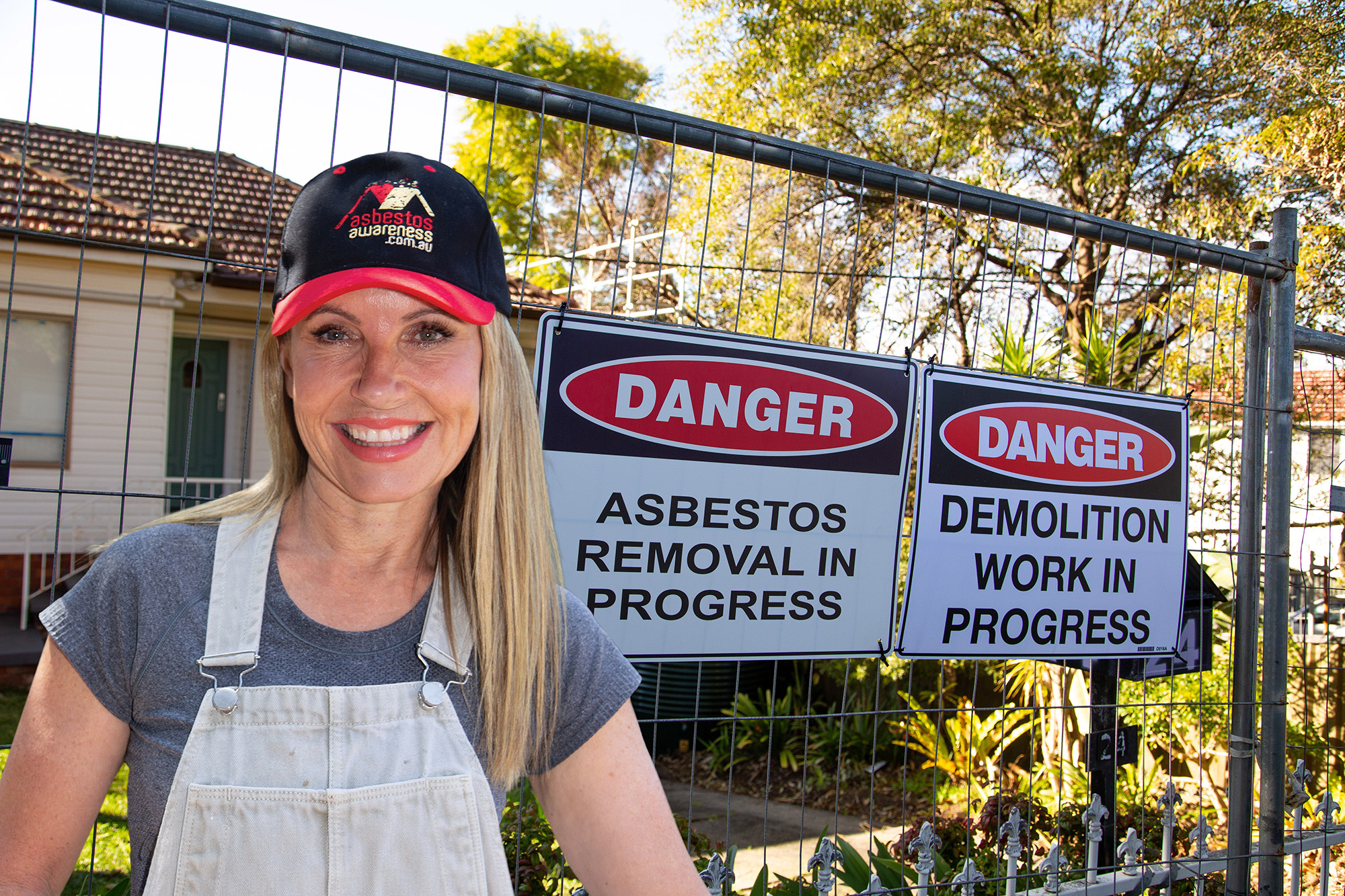
Asbestos Awareness Month Ambassador Cherie Barber

DIY Couple using Healthy House Checklist in laundry
This Asbestos Awareness Month, new WHO findings, record renovation spending & asbestos in one in three Australian homes reinforce the urgent need for education.
Chair of Advocacy Australia's Asbestos Education Committee, Clare Collins said, "Australia's national asbestos crisis will continue because many remain unaware or complacent of the risks of disturbing asbestos-containing materials (ACMs) found in one-in-three Australian homes.
"Prior to 2004, asbestos was used in the manufacture of a broad range of building and decorator products (over 3000), meaning a large number of 'legacy' ACMs can still be lurking in any home built or renovated before 1990, and in commercial properties built before 2004," said Ms Collins.
"Despite a complete asbestos ban in Australia almost 23 years ago, deaths from exposure to asbestos fibres are rising and will continue to rise due to a lack of education and awareness of the risks if legacy ACMs are disturbed during renovations, demolition or maintenance when people unnecessarily expose themselves to asbestos fibres," she said.
"With around 6 million tonnes of ageing ACMs remaining in our built environment including in one-third of Australian homes, asbestos remains an ever-present danger for those who fail to take the warnings seriously," Ms Collins said.
Recently, the World Health Organization's (WHO) Asbestos paper (11 August 2026), reported that all six forms of asbestos are carcinogenic causing a range of cancers including cancer of the lung, larynx, ovaries and malignant mesothelioma (there is no cure), noting that "Anyone engaging in construction, maintenance and demolition of buildings where asbestos has been used is potentially at risk even many years or decades after the asbestos was put in place."
The consistent need to grow awareness of asbestos risks was reinforced with the most recent National Asbestos Awareness Survey (2025) that found that while 91% of respondents knew a little bit about asbestos; in general, people reported being poor at identifying ACMs, while only 30% of people said that they could afford asbestos removal.
Cherie Barber, Australia's Renovation Queen(TM) and Ambassador for the National Asbestos Awareness Month campaign said, "Because there's no known safe level of exposure to asbestos fibres, increasing awareness of the dangers of asbestos during renovations and maintenance, and improving education among homeowners, renovators, DIYers and tradies on what to do to identify and manage ACMs safely in accordance with legislation, is vital in saving lives."
"With Housing Industry Association (HIA) analysis revealing $4.15 billion was spent on renovations in the 2026 June quarter, the highest three-month period of spending since 1974, the lack of public knowledge on ACM identification and the risks associated with disturbing asbestos; together with the current cost of living crisis and rising interest rates; the fear is people could put their lives and the lives of loved ones at risk if they try to remove ACMs themselves to save costs," Ms Barber said.
"With asbestos-related deaths projected to increase, and with so many older homes (one-in-three) containing ACMs, it's vital that those working on homes take the warnings seriously and visit www.asbestosawareness.com.au to learn what they need to know and importantly, only use licensed asbestos professionals to identify and remove ACMs," she said.
Clare Collins said, "Historically, men (particularly tradies) were more likely to be diagnosed with mesothelioma than women because they were more likely to encounter ACMs in the workplace. However, these statistics are changing with increased cases of non-occupational exposure particularly among renovators including women.
The Australian Institute of Health and Welfare's 2026 Mesothelioma in Australia Report from the Australian Mesothelioma Registry (AMR) paints a grim picture of asbestos exposure reporting mesothelioma cases have consistently risen over the past 40 years.
Among participants in the AMR who were assessed as having possible or probable asbestos exposure, 51% reported exposure during major home renovations where ACMs were present; 39% reported living in a house during renovations; 13% had resided in a fibro home built between 1947-1987; and 21% had lived with someone who brought dust into the home.
"Put simply, renovators, DIYers and tradies could be risking their lives and the lives of anyone present including children when ACMs are disturbed or when asbestos-containing dust is taken home on clothes or tools," she said.
"With cases of non-occupational exposure (only) recorded at 94.1% for women and 23.1% for men, and cases of both occupational and non-occupational exposure recorded at 51.5% (63.3% men and 5.6% women); improving awareness and education while providing practical information on how to manage ACMs safely can help save lives," said Ms Collins.
Asbestos could be found in any home built before 1990, lurking under floor coverings including carpets, linoleum and vinyl tiles. It could be in ceiling space (insulation), around hot water pipes, under kitchen sinks, behind wall and floor tiles, in cement floors, in flat and corrugated sheeting in internal and external walls, ceilings, eaves, roofs, fences, extensions, garages, outdoor toilets, backyard and farm structures, chook sheds and even dog kennels. It could be anywhere!
The risks were pointedly clear in a joint study conducted by the WHO and the International Labour Organisation which estimated exposure in the workplace was responsible for over 200,000 annual deaths globally, accounting for over 70% of all work-related cancer deaths. A substantial burden of asbestos-related disease also arises from non-occupational exposure.
"Preventing asbestos fibres exposure is the only way to prevent asbestos-related diseases, with awareness and education critical. Homeowners should respect asbestos and visit www.asbestosawareness.com.au and avoid asbestos risks by engaging licensed asbestos professionals, because it's not worth the risk," she said.
"With asbestos killing one Australian life every two-hours and eleven-minutes, when it comes to asbestos, Don't cut it! Don't drill it! Don't drop it! Don't sand it! Don't saw it! Don't scrape it! Don't scrub it! Don't dismantle it! Don't tip it! Don't waterblast it! Don't demolish it! Don't dump it! And whatever you do... DON'T remove asbestos yourself," Ms Collins
Access Media-Centre
Sources
Alice Collins
Advocacy Australia
media@advocacyaustralia.org.au
Visit us on social media:
LinkedIn
Instagram
Facebook
YouTube
X
Legal Disclaimer:
EIN Presswire provides this news content "as is" without warranty of any kind. We do not accept any responsibility or liability for the accuracy, content, images, videos, licenses, completeness, legality, or reliability of the information contained in this article. If you have any complaints or copyright issues related to this article, kindly contact the author above.
